Hudayriyat Island: Abu Dhabi's Most Ambitious Long-Term Residential District

Atlas Research Team
Market Intelligence
There are moments in Real Estate where a city quietly redraws its future. Not through a single announcement or a record-breaking launch, but through the sustained, deliberate accumulation of infrastructure, capital and vision. Abu Dhabi feels like it is in one of those moments right now. Hudayriyat Island is not simply another Off-Plan project in the UAE pipeline. It is a government-backed masterplan spanning over 51 million square metres, conceived as a long-term lifestyle district for the capital of the wealthiest emirate in the federation. The combination of sovereign delivery, controlled supply, island waterfront, golf infrastructure and a macro environment that produced AED 142 billion in Real Estate transactions in 2025 alone makes it one of the more substantive investment conversations in the region right now. This analysis works through the full picture: Abu Dhabi's macro trajectory, the island hierarchy and where Hudayriyat sits within it, the developer behind the vision, the masterplan's identity, the product launches and pricing, and the long-term case for patient capital.
Understanding Abu Dhabi's Island Hierarchy
To understand Hudayriyat properly, you first need to understand the role each of Abu Dhabi's major islands plays within the wider capital framework. Each one serves a distinct purpose and attracts a distinct type of buyer.
Al Maryah Island is the financial and commercial core. Home to ADGM, the Abu Dhabi Global Market, one of the world's fastest-growing international financial centres. This is where banks, sovereign funds, institutional firms and global capital operators are based.
Saadiyat Island is the cultural and ultra-luxury address. The Louvre, NYU Abu Dhabi, Four Seasons, Nobu, St Regis and Mamsha Beach. This is where global wealth preservation capital sits, alongside art, culture and architecture at the highest level.
Yas Island is the entertainment and tourism engine. Formula 1, theme parks, Disney, the Sphere. Built for visitors as much as residents, operating more as an experiential hub and yield play than a primary residential destination.
Hudayriyat is not trying to replicate any of them. It is carving out an entirely different lane: wellness, sport, beach lifestyle, low-density living and outdoor-focused community infrastructure. Critically, it sits only 10 minutes from Al Maryah, 15 minutes from Saadiyat and 15 minutes from Yas, which means residents access the full ecosystem of the capital without living inside its density.
The connectivity picture extends beyond the island itself. Hudayriyat sits approximately 20 minutes from Abu Dhabi International Airport and is integrated into the Etihad Rail Network, the national corridor connecting Abu Dhabi to Dubai and the wider UAE. That integration matters for the investment case because it expands the future tenant and buyer pool far beyond Abu Dhabi locals to professionals operating across multiple emirates. And historically, major infrastructure connectivity in the UAE has tended to reprice areas well before completion rather than after.
On access specifically, Modon has studied the lessons of the region's most celebrated master communities. Dubai Marina, one of the world's most iconic waterfront addresses, is also one of its most congested. Palm Jumeirah operates on a single bridge. Hudayriyat is planned with five total access points connecting it to the wider city, a level of infrastructure investment that signals precisely how seriously the government views the island's long-term role as a primary residential district.
Why Abu Dhabi's Macro Story Matters for This Investment
The numbers behind Abu Dhabi's Real Estate market in 2025 are not peripheral context. They are central to why Hudayriyat's timing is meaningful.
All data referenced below is drawn from the ADREC 2025 Annual Report, the Abu Dhabi Real Estate Centre, the official government regulator.
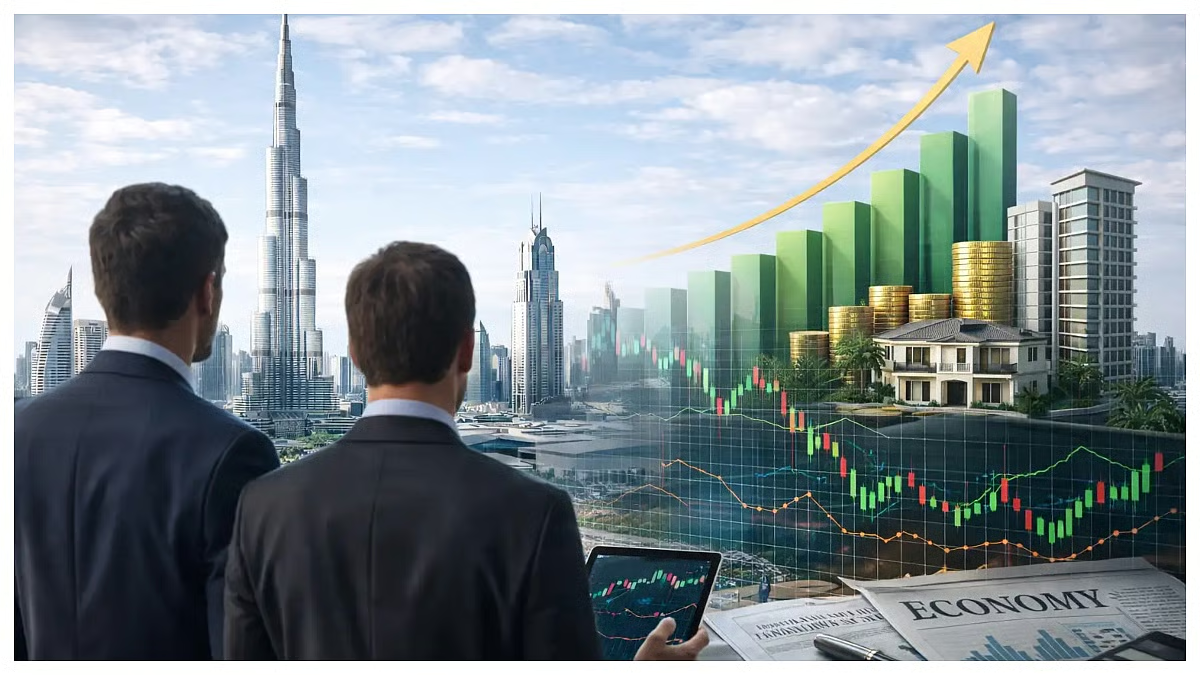
Total Real Estate transactions in Abu Dhabi reached AED 142 billion in 2025, a 44% increase year on year. Residential sales alone accounted for AED 76 billion, up 67% on the prior year. Within those residential transactions, 87% were cash. No mortgage, no leverage. That is sophisticated capital moving decisively off the sidelines and into Abu Dhabi Real Estate. It signals the quality and conviction of buyers entering the market.
71% of all residential sales were Off-Plan. Buyers are not waiting for completed product. They are committing early because early is where value creation concentrates. That is directly aligned with the thesis behind Hudayriyat.
The supply and demand dynamic reinforces this picture. Total residential stock sits at approximately 401,000 units. Supply has grown at roughly 2.7% annually since 2022. Occupied units, the real demand signal, have grown at 6.6% annually. That gap does not close overnight. It compounds.
The capital is diversified internationally. Between 2022 and 2025, 69% of residential sales growth was driven by resident expats and non-resident foreign investors. FDI purchases increased eightfold in that period. Resident foreign purchases grew fivefold. This is no longer a market driven primarily by UAE nationals or regional buyers. It is in genuine international capital territory.
The broader macro framework reinforces why: GDP per capita of approximately $77,000, $1.7 trillion in sovereign wealth, zero income tax, no capital controls, a USD-pegged currency, 100% freehold ownership in investment zones, non-oil GDP growing at 7.6% and a population expanding at 7.5% annually.
Hudayriyat sits directly inside this environment, directly exposed to the same pricing dynamics driving those numbers.
Who Is Modon and Why It Changes the Investment Dynamic
In any Off-Plan investment, understanding the developer is one of the most important parts of the analysis. With Hudayriyat, the developer question has an unusual answer.
Modon is not a conventional private developer optimising for short-term sales cycles and investor returns. It operates much closer to an urban development authority with a specific long-term mandate: to act as the delivery arm of the wealthiest emirate's long-term urban vision.
The company is majority-owned by ADQ through L'imad Holding, placing it directly within Abu Dhabi's sovereign ecosystem. In 2025, Modon closed the year with AED 13.8 billion in revenue and AED 3.9 billion in net profit. The balance sheet is substantial. But the more important point for investors is what Modon is mandated to do with it.
Modon's specific mission within the sovereign framework is to drive Abu Dhabi's 2030 urban vision into reality. That means the question being asked at Hudayriyat is not how to maximise short-term absorption. It is how to build one of the defining lifestyle districts of the capital over the next decade. That distinction fundamentally changes the risk profile of the investment.
The Group CEO, Bill O'Regan, brings over 25 years of experience across global infrastructure, large-scale masterplanning and urban delivery. His approach is infrastructure-first: roads, utilities and lifestyle anchors are built well before residential units hit the market. The evidence of that strategy is already visible on the island today. Surf Abu Dhabi, the world's largest man-made wave pool, is operational. The Bab Al Nojoum hospitality resorts are open. The velodrome and the 220km cycling network are in place. These are complex, high-traffic leisure assets that have already proven Modon's operational muscle at scale.
For investors, these infrastructure anchors function as a safety net. They guarantee long-term foot traffic, community relevance and value resilience regardless of short-term market cycles. The biggest risk in Off-Plan Real Estate is the gap between the render and the reality. Modon's track record and sovereign mandate narrow that gap considerably.
The Hudayriyat Identity: What Abu Dhabi Is Actually Building
The vision behind Hudayriyat is not incremental. Abu Dhabi is building a complete new district from nothing, with a very specific identity in mind: the active lifestyle island.
The masterplan spans over 51 million square metres, making it comparable in footprint to Manhattan. But Manhattan houses approximately 1.6 million people. Hudayriyat is planned for approximately 30,000 residents. That is roughly 98% less dense than Manhattan within the same geographic footprint. The scarcity this creates is intentional and structural. Low density combined with significant open space and coastal access is among the most durable drivers of long-term premium Real Estate value across every mature market globally.
The Beaches
Hudayriyat wraps approximately 16 kilometres of coastline around the island. Waterfront land is finite. Island waterfront directly connected into a capital city is rarer still. The beaches carry Blue Flag certification, meaning water quality, environmental management, safety standards and beach infrastructure are independently monitored to international standards. For genuine long-term family buyers, that certification is not a minor detail. It is a meaningful quality signal.
The Golf
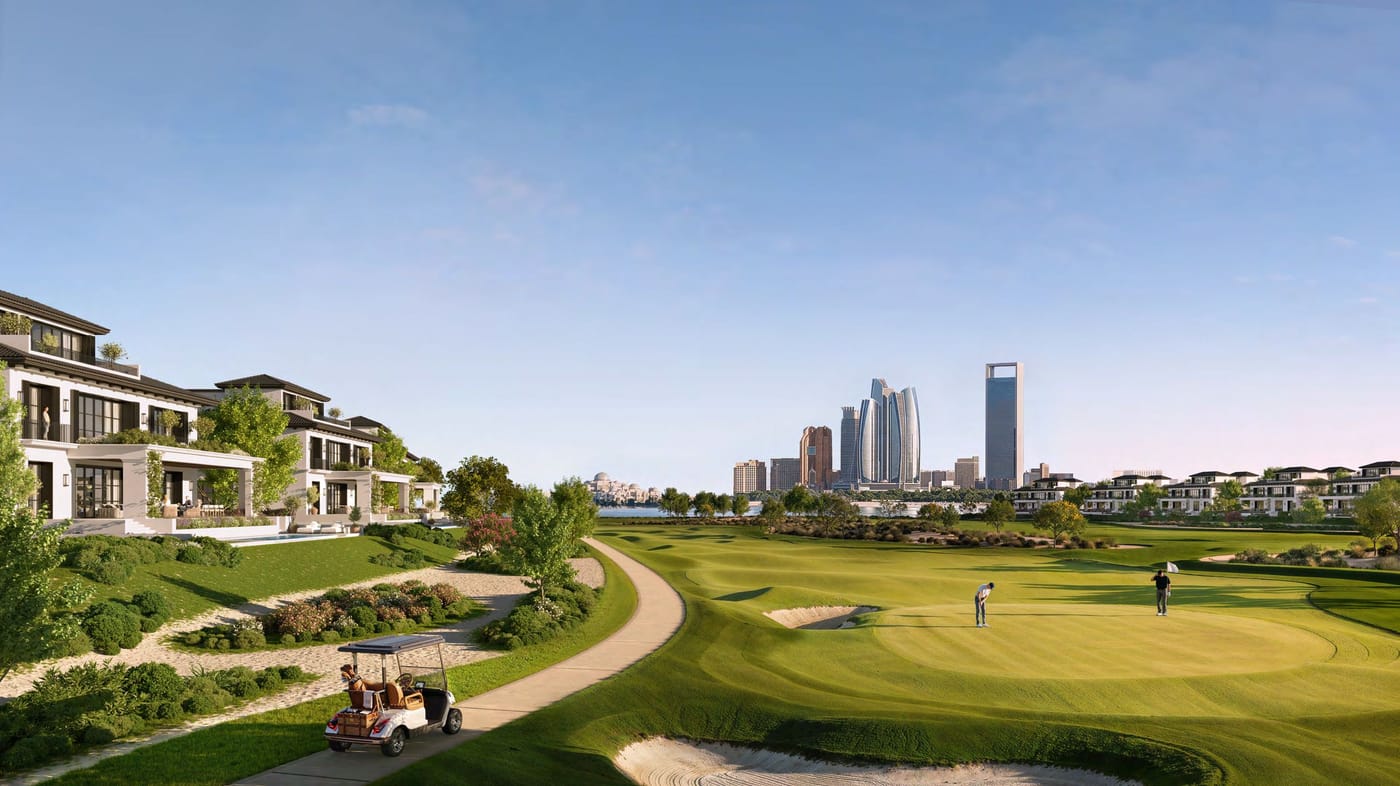
Golf-led planning has a well-documented track record of generating pricing power across residential communities. Emirates Hills, Jumeirah Golf Estates and Dubai Hills are among Dubai's most consistently premium addresses. Hudayriyat introduces something without precedent in the UAE: island golf. Two courses, including a PGA-certified championship course. Modon is positioning this as the UAE's first true island golf community. Golf communities globally attract a wealthy, lifestyle-driven buyer profile. That is precisely the buyer Hudayriyat is targeting.
The Elevation
Most land across the UAE is flat. Elevated coastal Real Estate is almost non-existent. Hudayriyat engineers elevation directly into the masterplan, creating layered positioning across the landscape that is rare in the region. Elevated plots provide privacy, better sightlines, superior views and a clear hierarchy of desirability across the community. The reference points for what elevation does to coastal Real Estate value are the French Riviera, the Amalfi Coast and Monaco, where premium pricing is heavily driven by elevated sea views.
The Lifestyle Infrastructure
The sport and wellness infrastructure is the most significant layer of the identity. Surf Abu Dhabi is operational. The velodrome is the region's first international-standard track. 321 Sports, a full sports village, contains the largest indoor sports dome in the Middle East. The 220km cycling network runs across the island. Wellness resorts, hospitality assets, beach clubs and community infrastructure are all part of the phased rollout.
This infrastructure is not an afterthought added to a residential project. It is the identity of the island. And destination infrastructure creates a reinforcing demand dynamic: people want to spend time there, then they want to live there, and then values rise around it. That is the pattern that Yas, Saadiyat and Palm Jumeirah have all demonstrated at different stages of their development.
The Product Launches and How Pricing Has Evolved
Modon has been deliberate in how it has phased Hudayriyat's residential development. Each launch has served a specific purpose within the masterplan and has established a pricing reference that subsequent launches have built upon.
Nawayef East and West Hill were the opening statement. Elevated hilltop villas at 55 metres above sea level with panoramic Gulf and skyline views. Four to eight-bedroom villas and mansions on plots up to 29,000 square feet. Launch pricing started from AED 6 million. These early buyers established the island's premium credentials and have since seen the pricing environment around them move substantially.
Al Naseem followed with California and Art Nouveau-inspired architecture. Four to six-bedroom freehold villas on private plots ranging from 7,800 to 11,000 square feet of built-up area. Launch pricing started from AED 7.8 million at approximately AED 1,479 to 1,573 per square foot. A 40/60 payment plan with handover targeted for Q4 2026. Al Naseem became the island's standalone villa benchmark and confirmed deep demand from both end users and investors at that price point.
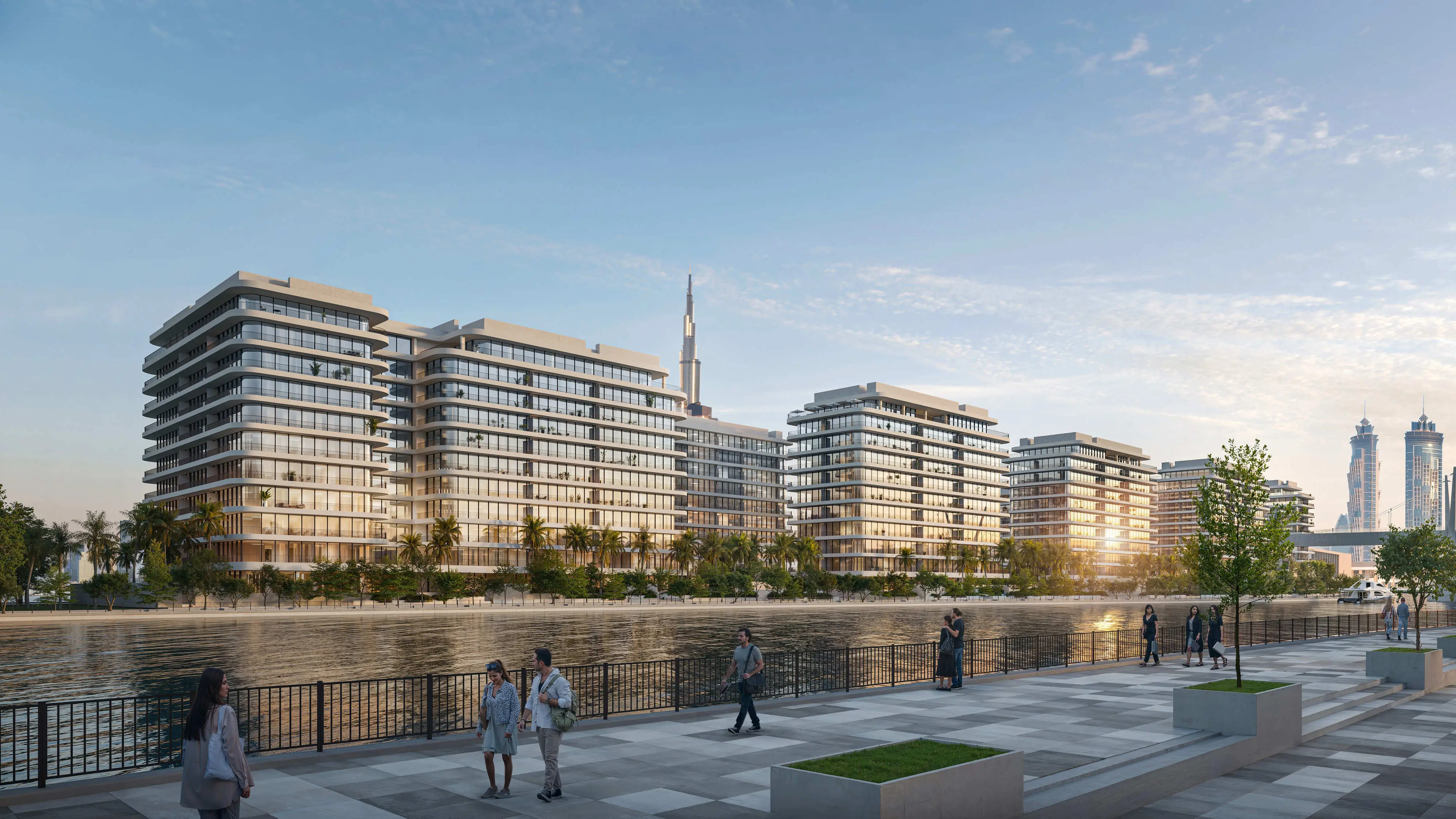
Bashayer introduced apartments to the island, bringing a new buyer profile into the masterplan. 157 villas and 330 apartments across one to four-bedroom configurations, with apartment entry from AED 2.35 million. AED 3 billion of product sold within 24 hours. A 50/50 payment plan with handover in 2029. Bashayer created the full residential ecosystem: entry at the apartment level, an upgrade path through the villa tiers, and demand remaining within the masterplan rather than dispersing elsewhere as buyers upsize.
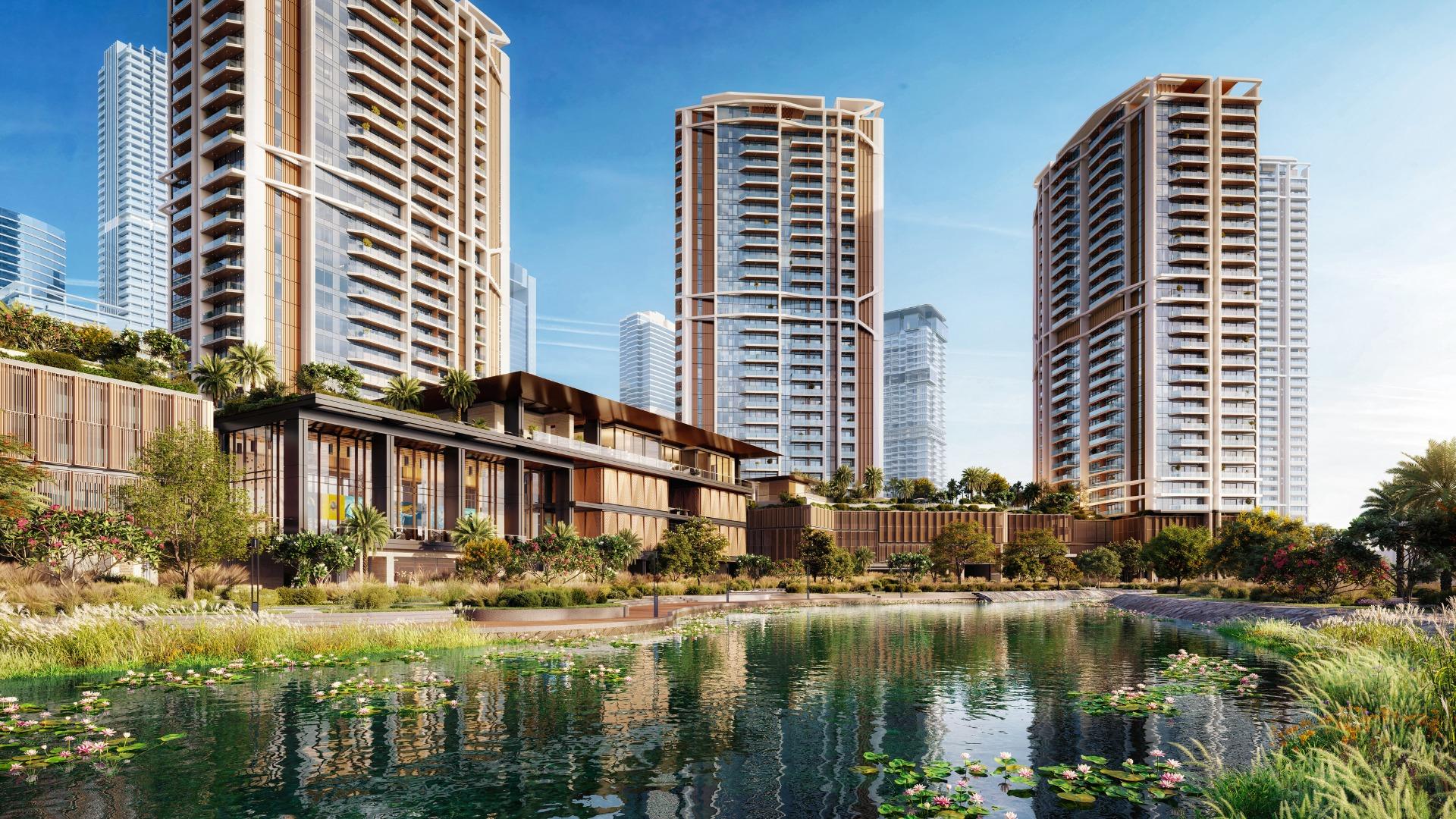
Hudayriyat Golf Estates is the current launch phase. 95 hectares. 1,300 freehold homes. Andalusian-inspired architecture. Two minutes from the beach. The Par 4 Villas start at AED 6.6 million for 3,420 square feet. The Par 3 Villas start at AED 4.6 million for 2,464 square feet. The payment plan is 40/60, with 40% during construction and 60% deferred to handover in Q2 2030. That back-loaded structure limits capital exposure through the construction period and is among the most investor-friendly plans currently available in the Abu Dhabi market. Due to the strength of demand, Modon has added additional units to the Golf Estates launch since it was announced.
The trajectory across these phases tells its own story. Each launch has priced the island higher around earlier buyers while introducing new buyer profiles and product types that broaden the demand base.
The Supply Dynamic: Why Controlled Release Matters
Abu Dhabi's pipeline to 2030 projects approximately 58,000 new units across the emirate. That figure sounds substantial until you look at where those units are going. Five districts will absorb 68% of that supply: Yas, Saadiyat, Al Reem, Zayed City and Khalifa City. Eight developers control 74% of the pipeline.
Hudayriyat is not inside that concentrated supply window. Modon's rollout has been phased deliberately across Nawayef, Al Naseem, Bashayer and Golf Estates: layer by layer, low density, controlled. Oversupply destroys pricing power. Controlled release preserves it.
That deliberate approach to supply management is one of the structural features that differentiates Hudayriyat from communities where inventory has been released faster than demand can absorb it.
The Long-Term Vision: What Hudayriyat Becomes
The ten-year picture for Hudayriyat is not simply more of the same. The island is adding infrastructure layers continuously and each addition reprices what already exists. Additional Bashayer apartment buildings are approaching release. A Mamsha-style waterfront apartment community is in the pipeline. A hill park confirmed adjacent to Golf Estates is set to be the largest in the Middle East. A sailing club and equestrian club are indicated as future additions, along with a Miami-concept island off the waterfront.
The pricing comparison that matters most for long-term context is not within Abu Dhabi but across global prime markets. Hudayriyat Golf Estates is currently entering the market at approximately $463 per square foot. The equivalent in Paris's 6th and 7th arrondissements runs between $1,500 and $1,650 per square foot. Manhattan prime condos sit between $1,950 and $2,300. Knightsbridge reaches $2,300 to $2,650.
Abu Dhabi is not Paris or Manhattan today. But Abu Dhabi is the capital of a federation with $1.7 trillion in sovereign wealth, zero income tax, a growing international population, significant job infrastructure and a macro trajectory that global capital is beginning to price seriously. The world has not yet fully priced Abu Dhabi's long-term positioning relative to those benchmarks. That gap is where the long-term opportunity lives.
Who Buys on Hudayriyat
The island's strength as an investment is partly that it appeals to genuinely distinct buyer profiles simultaneously, which creates more resilient long-term demand than a community targeting a single type of purchaser.
Family buyers prioritise the self-contained ecosystem: schools, sports facilities, healthcare and lifestyle amenities within a short radius, alongside the option to upsize or downsize within the same community as circumstances change. This group includes both Dubai residents seeking relief from urban density and international newcomers drawn by lifestyle and professional opportunity.
Active wealth executives are high-net-worth professionals who select Hudayriyat as a personal wellness and lifestyle base while benefitting from proximity to ADGM and Abu Dhabi's business district. The cycling tracks, surf park, golf courses and curated green spaces integrate fitness into daily life at a level that very few residential addresses in the region can match.
Sovereign-aligned investors view Hudayriyat as a capital preservation asset backed by long-term government vision. They are buying for residency, for legacy and for hold, treating the island as a strategic allocation within a wider wealth management approach rather than a short-term trading position.
The Bottom Line
The projects that truly separate themselves over time tend to be positioned around scarcity, connectivity, lifestyle quality, strong infrastructure and an identity that is genuinely difficult to replicate.
Hudayriyat checks each of those conditions. A low-density island district inside the capital of the UAE, wrapped around 16 kilometres of Blue Flag coastline, island golf, world-class sport and wellness infrastructure, backed by sovereign capital and delivered by one of the most powerful development entities in the region.
The pattern in successful master communities is consistent: first comes infrastructure, then comes identity, then comes demand, and finally repricing. What makes Hudayriyat particularly interesting is that all three early stages are forming simultaneously.
No investment is without risk. Execution matters. Timing matters. Entry price matters. Not every product within a masterplan performs equally. But as a long-term strategic district within the UAE's capital, the underlying ingredients are unusually well-aligned at a stage when the ecosystem still feels relatively early in its evolution.
The highest-performing master communities have rarely emerged from a single brilliant feature. They emerge when product, pricing, location, infrastructure and end-user demand all begin moving in the same direction at the same time. Looking at Hudayriyat today, that alignment is present.
Frequently Asked Questions
What is Hudayriyat Island?
Hudayriyat Island is a large-scale government-backed masterplan in Abu Dhabi covering over 51 million square metres, comparable in footprint to Manhattan. Developed by Modon, Abu Dhabi's sovereign-backed urban development arm, the island is being built as a low-density lifestyle district centred around wellness, sport, beach living, golf and outdoor-focused community infrastructure. It is planned for approximately 30,000 residents, making it significantly less dense than most comparable masterplans globally.
Where is Hudayriyat Island located?
Hudayriyat Island is located approximately 10 minutes from central Abu Dhabi, 20 minutes from Abu Dhabi International Airport, 10 minutes from Al Maryah Island and 15 minutes from both Saadiyat Island and Yas Island. The island is also integrated into the Etihad Rail Network connecting Abu Dhabi to Dubai and the wider UAE.
Who is developing Hudayriyat Island?
Hudayriyat Island is being developed by Modon, a company majority-owned by ADQ through L'imad Holding, placing it directly within Abu Dhabi's sovereign ecosystem. Modon's mandate is to act as the delivery arm for Abu Dhabi's long-term urban vision. The company closed 2025 with AED 13.8 billion in revenue and AED 3.9 billion in net profit.
What residential projects are available on Hudayriyat Island?
Hudayriyat's residential phases include Nawayef East and West Hill (elevated villas from AED 6 million), Al Naseem (freehold villas from AED 7.8 million with handover Q4 2026), Bashayer (apartments from AED 2.35 million with handover 2029) and Hudayriyat Golf Estates (the current phase, with Par 3 Villas from AED 4.6 million and Par 4 Villas from AED 6.6 million, handover Q2 2030).
What is the payment plan for Hudayriyat Golf Estates?
Hudayriyat Golf Estates offers a 40/60 payment plan: 40% is payable during construction and 60% is deferred to handover in Q2 2030. This back-loaded structure limits capital exposure through the construction period and is among the most investor-friendly payment plans currently available in the Abu Dhabi Off-Plan market.
What lifestyle amenities does Hudayriyat Island have?
Hudayriyat Island's lifestyle infrastructure includes Surf Abu Dhabi, the world's largest man-made wave pool, the velodrome, the region's first international-standard cycling track, a 220km cycling network, 321 Sports, a full sports village with the largest indoor sports dome in the Middle East, two golf courses including a PGA-certified championship course, Blue Flag certified beaches across approximately 16 kilometres of coastline, wellness resorts and hospitality assets.
What is the price per square foot at Hudayriyat Island?
Pricing varies across the residential phases. Al Naseem villas launched at approximately AED 1,479 to 1,573 per square foot on built-up area. Hudayriyat Golf Estates Par 3 Villas start from AED 4.6 million for 2,464 square feet and Par 4 Villas from AED 6.6 million for 3,420 square feet. In US dollar terms, Golf Estates entry represents approximately $463 per square foot.
How does Hudayriyat's supply compare to the rest of Abu Dhabi?
Abu Dhabi's residential pipeline to 2030 projects approximately 58,000 new units, with 68% concentrated in five districts: Yas, Saadiyat, Al Reem, Zayed City and Khalifa City. Hudayriyat sits outside that concentrated supply window. Modon's deliberate phased rollout keeps density low and supply controlled, which protects long-term pricing power.
What makes Hudayriyat different from Saadiyat and Yas Island?
Saadiyat Island is Abu Dhabi's cultural and ultra-luxury address, home to the Louvre and premium hotel brands. Yas Island is the entertainment and tourism hub, built around Formula 1 and theme parks. Hudayriyat is carving out a distinct identity built on wellness, sport, active lifestyle, beach living, golf and low-density residential quality. It is not trying to replicate the identity of either island.
Is Hudayriyat Island a good long-term investment?
Hudayriyat combines several structural conditions that have historically driven long-term appreciation in master communities: controlled and low-density supply, island waterfront scarcity, sovereign developer backing, established lifestyle infrastructure, strong Abu Dhabi macro fundamentals and a pricing entry point that sits significantly below comparable global prime residential markets. The appropriate horizon is medium to long term, and not every product within the masterplan will perform equally. As with any Off-Plan investment, execution risk, timing and product selection all matter.
About the author
Atlas Research Team
Market Intelligence · Atlas Advisory Real Estate
The Atlas Research Team analyses DLD transaction data, developer pipelines, and macroeconomic indicators to produce independent, data-driven insight for property investors across the UAE.
Speak with an Advisor
Have questions about this topic?
Our Advisors provide personalised briefings at no cost. No commitment required.
Request a free consultation