You're Waiting For Certainty. The Market Isn't

Adam Kumar
Senior Advisor
Dubai's Off-Plan market doesn't pause for geopolitical headlines, even when investors do. Holding cash while you wait for certainty rarely avoids risk, it just delays the entry price you eventually pay. This is Atlas Advisory's framework for using periods of uncertainty, when developers are most willing to restructure payment plans, to protect liquidity while still securing differentiated, high demand assets.
Key Takeaways
Waiting for geopolitical "clarity" before investing in Dubai Off-Plan real estate usually means paying full price later, not avoiding risk now.
Market uncertainty is when developers are most willing to offer flexible payment structures, such as moving from a standard 70:30 plan to a 50:30 plan with a delayed second instalment.
The safest exit strategy is built before entry, not after, by choosing differentiated, high-demand micro-locations over standard, oversupplied apartment stock.
The Market Isn't Waiting
The market isn't waiting, but casual investors are.
Everywhere you look on social media, there is a new headline about geopolitical tension, and recently that tension has flared up again in our region, much as it did earlier in the year.
As a real estate advisor on the ground here in Dubai, the consistent message we hear from clients right now is that instinct is telling them this probably isn't the best time to invest.
Why Holding Cash Feels Safe, and Rarely Is
Holding onto liquidity to assess the landscape can feel like the safest play. But in wealth management, in property cycles, and honestly in life, the safest feeling is often the most expensive one.
You might be stuck in a familiar dilemma: you want exposure to UAE real estate because it's a high performing market, but you're wary of locking up heavy cash outlays while the world feels uncertain.
That caution is reasonable given the headlines. But alongside taxes and death, uncertainty is guaranteed. It shows up when you pour time into a project, when you invest emotionally in a relationship, and it shows up here too, when you're considering moving cash into an investment.
Standing on the sidelines has its own hidden cost: opportunity loss.
The biggest returns, across any asset class, are rarely made when headlines are calm and everyone is competing for the same asset at peak pricing. They're made in the pause. When market noise creates hesitation, Dubai's long term fundamentals don't disappear, but the leverage shifts. Developers who normally demand aggressive upfront cash flows are forced to get more creative to keep momentum going.
The real risk in the UAE market isn't the real estate itself. It's illiquidity: tying up too much cash, too early, in a rigid structure.
How Smart Capital Is Actually Moving Right Now
Despite the headlines, capital hasn't stopped moving. The Atlas team has been actively helping clients acquire across several asset types through this period, and the shift we're seeing isn't in appetite, it's in the questions clients ask.
Before the recent tensions, the first question was almost always:
"Is this a good project, and what should I buy?"
Now it's:
"Is now the right entry point for me, and how do I structure this so I'm not overcommitted if the world changes again?"
That second question is a far better starting point for any real estate decision, and it's the one this framework is built to answer.
1. Favourable Cash Flow Mechanics
Atlas is an elite partner with several developers, and Ellington Properties LLC has become a favourite among our independent clients (non-institutional buyers, meaning normal, working professionals) during this period, for a clear reason: as one of Ellington's bulk buying partners, we can often restructure payment plans on their behalf.
A traditional 70:30 payment plan can sometimes be amended to 50:50. The second instalment, usually due 30 days after booking, can be pushed to 180 days. This stretches your cash flow commitments so your capital stays protected while you still hold a prime asset.
2. Value vs Novelty
The corridor that took the hardest hit in this market softening was Off-Plan resale, where an investor buys from a developer and tries to sell before handover.
Many owners in this segment got caught out because they were sold a property rather than advised on an investment. They bought into momentum and hype rather than underlying value. When conditions tightened, they either needed to exit because they were overleveraged, or they were left overexposed because a broker had promised them liquidity mid-construction that never materialised.
Hope is not a strategy. If an investment doesn't offer specific, differentiated value, exiting becomes difficult at almost any point in the cycle. This is also where the "apartments are oversupplied" narrative comes from, and where most people misread the market.
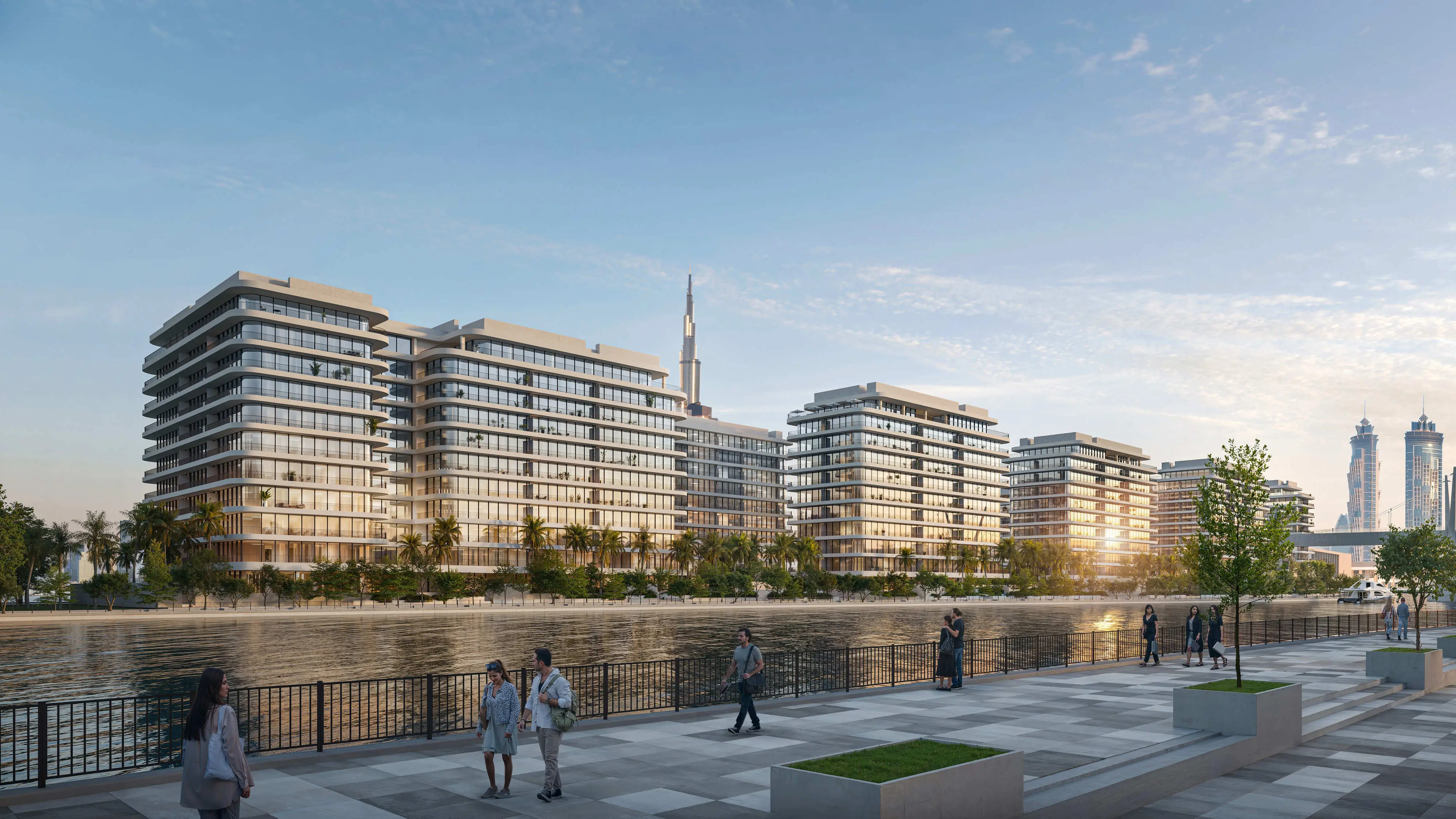
Standard apartment supply is genuinely abundant. But differentiated supply in high tenant demand, low apartment micro-locations, such as Ellington's Eltiera Views or Expo's Valley Views, remains genuinely scarce. That's the difference between a value investment and a novelty investment.
3. Considering Exit Before Entry
In ten years of advisory, the clearest pattern is that investors spend far more time thinking about how to get in than how they'll get out. And the best performing assets aren't the ones that are simply easy to enter. They're the ones someone else will want later.
That's especially true for Off-Plan investing in the UAE, where the real opportunity is the region itself. We're at a point where investors can choose the strongest asset within a rising market before the wider crowd catches on to which areas will define Dubai's future downtowns.
There's also a quieter benefit to this slower period: reduced launch volume gives us more time for genuine due diligence on each product, so we can map out payment mechanics and an exit-to-entry strategy that confirms both the timing and the structure make sense for a given client's situation.
What Your Entry Point Looks Like in Three Years
If you're holding capital and want exposure to a high performing market, the first shift should be in framing: from "is this a good project" to "does this entry point make sense for me." Every investor has a different risk appetite, liquidity position, and time horizon. The right investment is the one that fits your constraints today, not someone else's.
History suggests the headline noise freezing people today will pass, the way markets absorbed the Russia-Ukraine conflict, COVID, and the 2008 crisis before it. While others wait for clarity, the investors who lock in an entry price during uncertainty, backed by flexible payment mechanics that keep liquidity free flowing, end up holding assets that were once aspirational and are now realistic.
From there, two outcomes follow: delivery of a high demand, design led asset commanding strong rental income, or an earlier capital exit. Either way, a lower entry point during uncertainty typically means a meaningfully higher return on equity than paying full price in a calmer market later.
Uncertainty isn't something to avoid. It's the environment that creates unequal access, and unequal access is where the advantage sits.
If you're holding capital and waiting for the "perfect time," ask a simpler question: once the news cools down, will developers still offer these entry mechanics? Almost always, the answer is no. Flexible terms exist because of the hesitation. That's the window.
If you'd like to review the current cash flow breakdown across Atlas's active projects, including where the terms sit versus the open market, reach out to the team directly.
Congratulations to everyone who found the clarity and confidence to buy in this window. See you on the other side.
Frequently Asked Questions
Is now a good time to invest in Dubai real estate given regional uncertainty?
Periods of geopolitical uncertainty in Dubai's Off-Plan market have historically coincided with more favourable developer terms, including restructured payment plans and lower entry pricing, because developers compete harder to maintain sales momentum. Investors who wait for headlines to fully calm typically pay more and lose access to these flexible structures.
What is a 50:50 payment plan and how is it different from the standard 70:30 structure?
A standard Off-Plan payment plan in Dubai is often structured 70:30, meaning 70 percent is paid during construction and 30 percent on or after handover. In softer market periods, some developers, including Ellington Properties, will restructure this to a more balanced split and extend the timing of early instalments, which reduces the amount of cash an investor needs to commit upfront.
Why have Off-Plan resale properties in Dubai underperformed recently?
Off-Plan resales, where a buyer purchases from a developer and tries to sell before handover, were hit hardest in the recent market softening. Many of these owners bought based on hype rather than underlying value, and became overexposed when they couldn't complete their payment plan or exit as easily as promised.
How does Atlas Advisory evaluate whether an Off-Plan project is a good investment?
Atlas evaluates every project through three lenses: favourable cash flow mechanics (how flexible the payment structure is), value versus novelty (whether the location and product have genuine scarcity, not just hype), and exit strategy considered before entry (whether the asset will be in demand at resale or handover, not just easy to buy today).
How can I review Atlas Advisory's current project terms and payment structures?
Investors can request a breakdown of Atlas's active project terms, including payment plan structures and pricing versus the open market, by contacting the Atlas Advisory team directly.
About the author
Adam Kumar
Senior Advisor · Atlas Advisory Real Estate
Adam Kumar has advised private clients on UAE property investment for over a decade, with a focus on cross-border transactions and residency planning for high-net-worth individuals from Europe, South Asia, and the GCC.
Speak with an Advisor
Have questions about this topic?
Our Advisors provide personalised briefings at no cost. No commitment required.
Request a free consultation