Lunaya by Zaya: The Next Evolution of Dubai's Most Distinctive Green Luxury Community

Atlas Research Team
Market Intelligence
Every so often in Dubai, a project does not feel like just another launch. It feels like the beginning of a place. Lunaya is one of those projects. In a market where buyers are asking harder questions, looking more closely at developers, products and locations, and where launch noise is no longer enough to carry a project, Lunaya stands on a different foundation. It is built by Zaya, the developers behind Al Barari, applying the same philosophy that made one of Dubai's most enduring luxury communities to a new location at a new stage of the city's growth. The question this analysis is trying to answer is a simple one: can Zaya take what worked at Al Barari and create the next version of that story in Dubai's emerging southern corridor?
Who Is Zaya and Why It Matters
With Lunaya, the developer is not simply a name on a brochure. It is the starting point of the investment case.
Zaya was founded by Nadia Zaal, an Emirati entrepreneur and former CEO of Al Barari Group. The company's portfolio spans Al Barari, Nurai Island and Zuha Island, representing over $6 billion in delivered projects. But what distinguishes Zaya from conventional volume developers is not the scale of what they have built. It is the philosophy behind it.
Zaya does not start with density and add landscaping afterwards. They start with how a place should feel. The environment comes first, and the Real Estate is built around it.
Al Barari is the clearest expression of that approach: a heavily landscaped, nature-led, low-density community that became one of the greenest in Dubai, attracting high-net-worth families, long-term residents and buyers who wanted luxury without urban density. Nurai Island followed with barefoot luxury, privacy and environmental thinking including the region's first floating solar plant.
Even Al Fanar School, Zaya's education project, carries the same thread. A British-curriculum primary school built around play-based, nature-led learning, using a Head, Heart, Hands model that prioritises curiosity, movement, creativity and emotional wellbeing. When a developer's thinking stays consistent across Real Estate, private islands and primary education, it tells you something real about the founding vision.
That vision is why Zaya is different from Emaar or Meraas, who excel at scale and infrastructure. Zaya's strength is atmosphere. Their projects feel more private, more sensory, more considered and more connected to nature. And that distinction is critical for understanding Lunaya.
What Al Barari Actually Proved
To understand the potential of Lunaya, you need to understand the Al Barari story properly.
When Al Barari launched in 2005, the concept was seen by many as overly ambitious. The location was not Palm Jumeirah, Emirates Hills or beachfront. Creating a heavily landscaped, nature-led, low-density community in the middle of the desert seemed like a significant risk. For a lot of buyers at the time, it felt too far out.
What happened over the following two decades showed exactly what Zaya's philosophy is capable of.
Al Barari created atmosphere rather than simply building large villas. From the moment you enter the community, the pace changes. Mature trees, water features, shaded roads, privacy between homes and a low-density environment that genuinely feels different from the rest of Dubai. The Farm, Al Barari's restaurant, sits beside streams of water surrounded by nature in a way that makes you forget you are in the city.
The market rewarded that consistently.
Between 2015 and 2026, Al Barari recorded over 900 villa and townhouse transactions, including close to 600 villa transactions and more than 300 townhouse transactions. This was not a handful of trophy sales. It became a genuine luxury family market with real depth and consistent liquidity.
The appreciation data is where the track record becomes most compelling. Chorisia Villas have seen in several cases roughly 100% to 150% appreciation over around three years. Lunaria villas have recorded approximately 110% to 140% appreciation in under three years. To take specific examples from Dubai Land Department records: Chorisia Villas 2 unit BA-R-094 transacted at AED 6.257 million in December 2022 and at AED 15.5 million in December 2025, representing approximately 148% appreciation. Lunaria villa BAR 036 transacted at AED 19.36 million in March 2023 and at AED 44.2 million in December 2025, representing approximately 128% appreciation.
The point is not that Lunaya will automatically repeat those numbers. The point is that this development philosophy has already been rewarded by the Dubai market in a meaningful and documented way. Greenery was not just a nice feature. It became part of the value. Privacy was not just marketing language. It became part of the premium. The atmosphere of the community created real demand over time.
That is the bridge into Lunaya.
What Lunaya Is
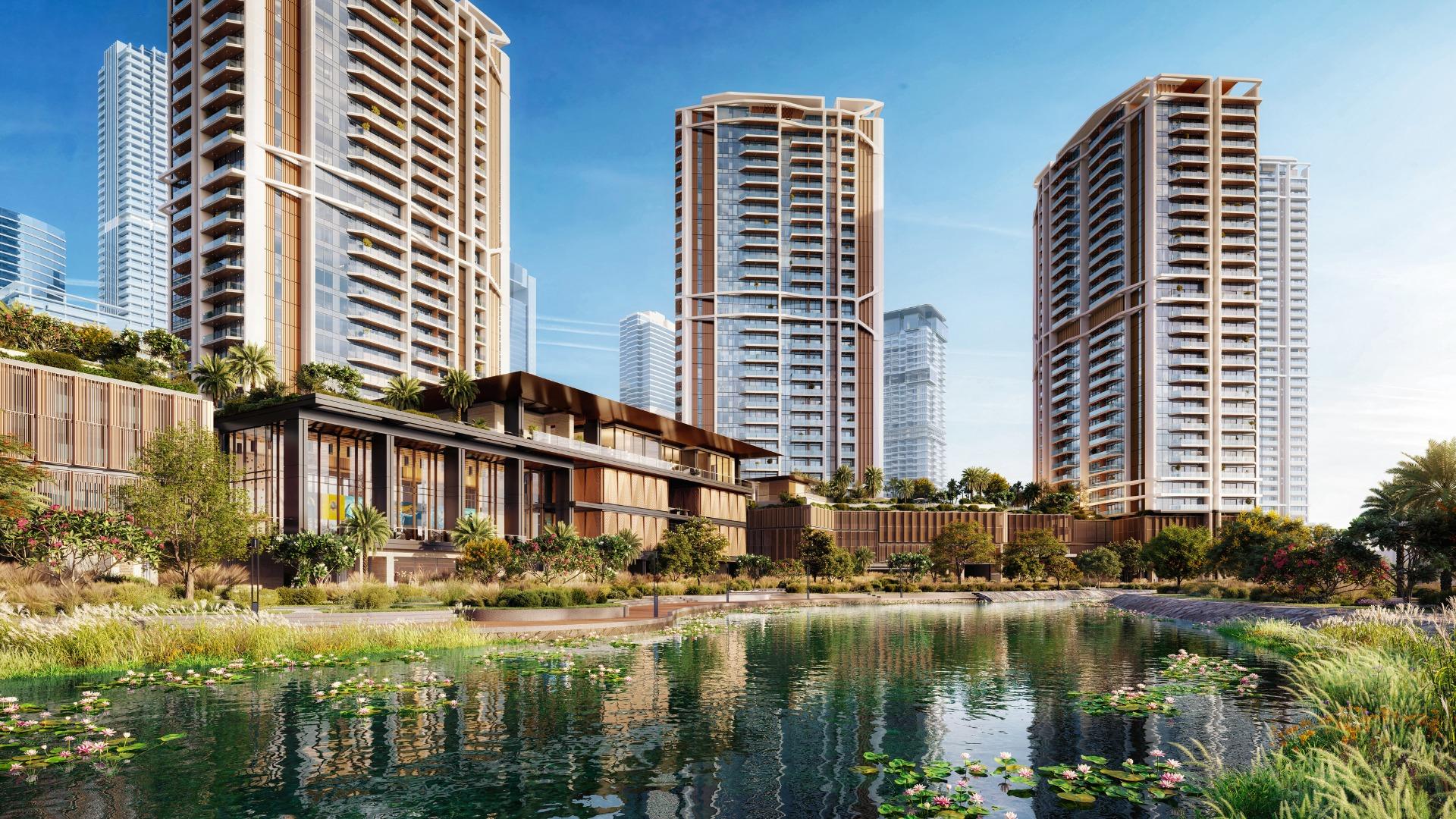
Most master communities are designed around roads. Lunaya is designed around flowing water, greenery and movement.
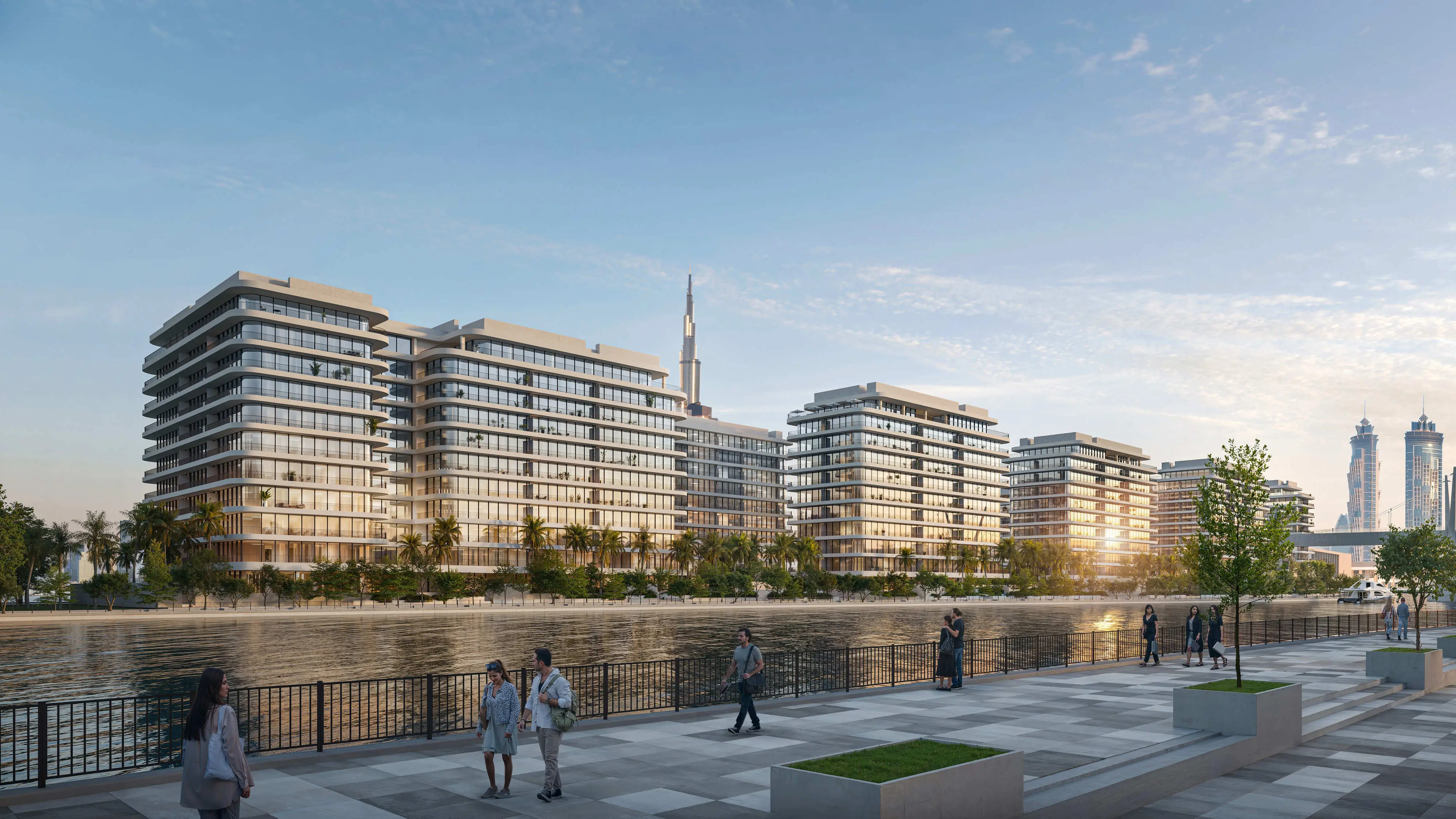
The project is a full masterplan of villas, townhouses and apartments located in Dubai's emerging southern corridor, near Palm Jebel Ali, Jebel Ali Beach, Expo City, Dubai South and Al Maktoum Airport. Around 65% of the community is dedicated to greenery and open space, with 900,000 square feet of swimmable lagoons woven throughout the masterplan.
This is not landscaping added around a residential development. The masterplan appears to be built around the landscape itself: water, green corridors, movement, privacy and a softer rhythm of daily life. The homes sit within the environment rather than the environment being arranged around the homes.
The amenity offering reflects the same direction throughout. Farm-to-table dining, a patisserie, lagoon dining, an advanced gym and spa, pilates and wellness studio, pickleball and padel courts, a 4.5 kilometre running and cycling trail, outdoor lagoon cinema, spacious parks, kids' areas, a supermarket, pharmacy and a biohacking suite. The breadth is notable, but what matters more than the list is the consistency. Every amenity points toward wellness, movement, family life, food, nature and community. That gives the project a genuine identity rather than a collection of features.
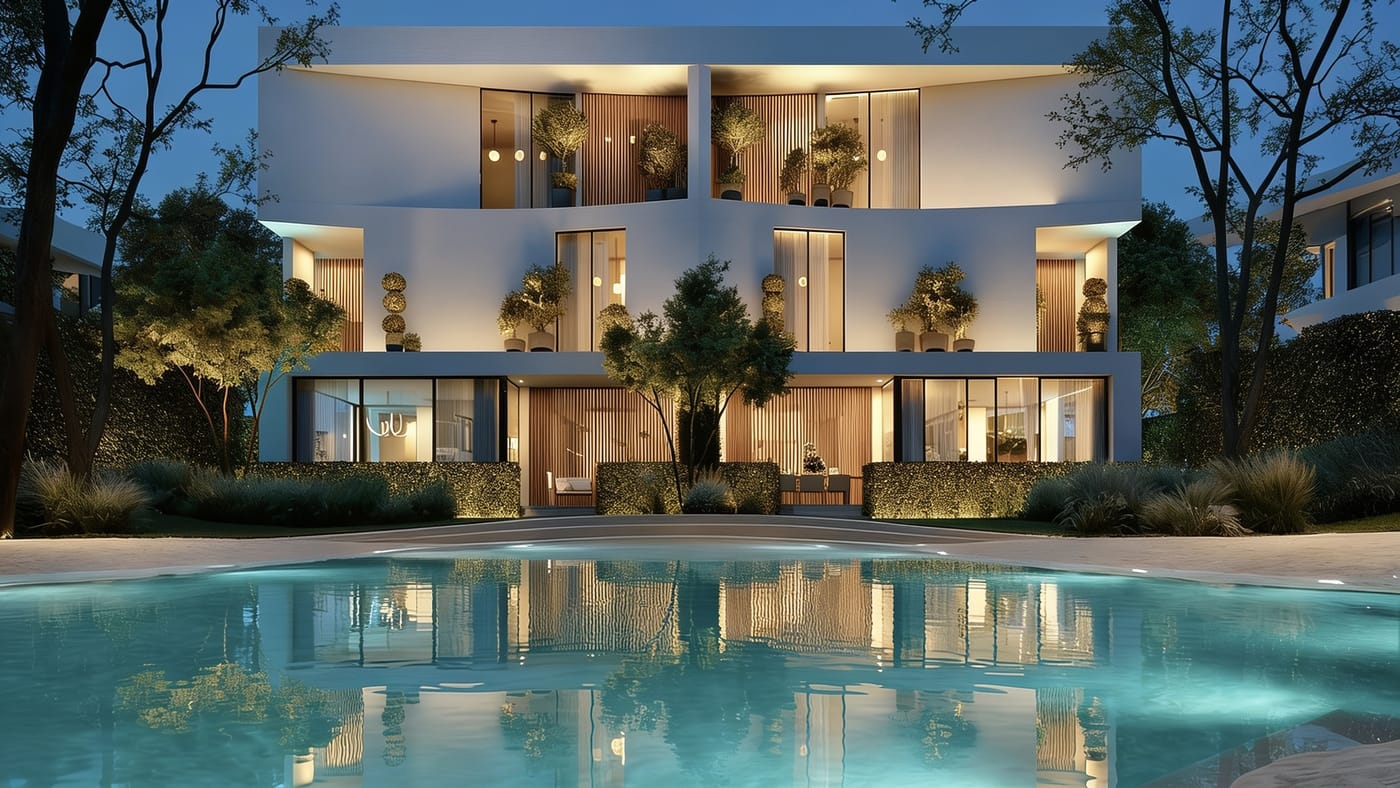
The villa and townhouse collection spans approximately 500 homes across the community, which is a deliberate scarcity. The product range runs from Bloom, four-bedroom townhouses of approximately 3,000 square feet, through Rise, four-bedroom maisonettes of approximately 3,800 square feet, to Dune, five-bedroom dual villas of approximately 6,600 square feet, and Sol, five-bedroom standalone villas of approximately 8,200 square feet that are now fully absorbed.
The layouts themselves reflect the philosophy. Internal gardens, courtyards, double-height spaces, large glazing and strong natural light throughout. These feel designed for how families actually live rather than for maximising sellable square footage, and that alignment with end-user liveability is historically what drives the strongest long-term community demand.
Why the Timing Is Relevant
Luxury Real Estate is changing. The older markers still matter: location, views, waterfront, brand, architecture, size. But a clear shift is underway in what wealthy buyers are actually prioritising.
Health, privacy, space, nature, experience, belonging and a better quality of daily life are increasingly influencing where high-net-worth families choose to live. This is not abstract. You can see it in how people live: tracking sleep, recovery, stress, nutrition and longevity at a level that simply did not exist a decade ago. That shift was always going to move into Real Estate, and it already has.
Six Senses Residences on Palm Jumeirah is one example. The project was not simply selling a branded residence. It was selling wellness, privacy, longevity and a very specific way of living. The market rewarded that heavily.
Knight Frank's Wealth Report frames this shift clearly: luxury is moving away from simple status and accumulation towards more meaningful, experience-led priorities, including personal growth, wellness and belonging. It also notes that for wealthy families, privacy is increasingly one of the greatest luxuries of all.
In Dubai specifically, that dynamic has additional weight. Dubai is an extraordinary city, but it is also fast-moving, urban, hot for much of the year and increasingly dense in many established locations. In a desert city, greenery is not a decoration. It becomes part of the value.
The global wellness economy now exceeds USD 6 trillion and continues to grow. The strongest wellness communities are not simply adding a gym and soft marketing language. They are designing entire environments that encourage healthier lifestyles every day through walkability, green space, nature, community, movement and connection. That is exactly what Lunaya is attempting to create.
If Zaya delivers the environment properly, Lunaya is aligned with where luxury demand is moving. It has carved out a position in one of the most undersupplied niches in the Dubai market: luxury Real Estate that provides a genuine, integrated lifestyle system rather than a list of facilities.
The Location: Why the Southern Corridor Matters
Lunaya is located in Jebel Ali, just off Sheikh Zayed Road, close to The Outlet Village and Dubai Parks and Resorts. That description does not fully capture what is happening around it.
The community is not isolated. There is direct access to Sheikh Zayed Road and real infrastructure already in place around the site. But the more important context is what is being built in the surrounding corridor.
Palm Jebel Ali is the obvious emotional anchor. Planned to be around double the size of Palm Jumeirah, it will bring a new wave of waterfront living, hospitality, lifestyle infrastructure and global attention to this part of Dubai. Expo City is part of Dubai's long-term urban plan and one of the key anchors for future growth in the south. Dubai South and Al Maktoum International Airport represent the largest piece of the story: an approved AED 128 billion expansion programme that is designed to make DWC the world's largest airport, ultimately handling up to 260 million passengers annually.
That is not a small infrastructure story. It is city-defining.
All of this sits within Dubai's D33 agenda, which targets doubling the size of Dubai's economy by 2033 and positions the city among the top five global hubs for living, investing and working. The Dubai 2040 Urban Master Plan provides the longer-term framework, a blueprint where infrastructure, employment, connectivity and residential expansion are being delivered in tandem across exactly this corridor.
Zaya's strategic choice of location is worth understanding clearly. Lunaya is not trying to be Palm Jebel Ali. Palm Jebel Ali will become a large, visible, globally recognised waterfront trophy destination. Lunaya is something different: quieter, more private, more exclusive and more inward-facing. It offers access to the broader southern growth story without requiring residents to live inside the scale and visibility of a mega-destination.
Palm Jebel Ali may bring attention and infrastructure to the corridor. Lunaya can offer the sanctuary within it.
It is early from a prime luxury residential perspective. But so was Al Barari when it first launched, and that same out-of-the-way quality became part of what made it so valuable. The better question is not whether this is already mature prime Dubai. The better question is whether this is the kind of location that will look very different in a decade as the southern corridor continues to take shape.
Pricing, Payment Plan and What Remains Available
At the time of writing, the current villa and townhouse availability across Lunaya is as follows:
Bloom, four-bedroom townhouses of approximately 3,000 square feet, carries limited remaining availability at approximately AED 1,750 per square foot. Rise, four-bedroom maisonettes of approximately 3,800 square feet, represents the main remaining availability at approximately AED 1,902 per square foot. Dune, five-bedroom dual villas of approximately 6,600 square feet, has very limited availability at approximately AED 1,952 per square foot. Sol, five-bedroom standalone villas of approximately 8,200 square feet, is fully absorbed.
The absorption of Sol and the limited remaining Dune inventory is significant. In a market where buyers have become more cautious and where offshore capital is asking harder questions, the strongest stock in a nature-led wellness community with Zaya's track record has moved quickly. That tells you something real about conviction levels around this project.
The payment structure is 10% on booking, 4% DLD, followed by staged instalments through 2026 and early 2027, with 60% due at completion expected in April 2029. For an emerging corridor investment, that back-loaded structure is meaningful. You are securing the asset now at today's pricing, with the majority of your capital deployed closer to completion, by which point the landscaping, Palm Jebel Ali, Expo City, Dubai South and Al Maktoum Airport should all be considerably further along. That does not remove risk, but it makes the capital structure sensible.
Pricing in Context: How Lunaya Sits Against Ready Communities
Comparing an Off-Plan community against ready communities involves important caveats. Different locations, different maturity levels, different product types and different masterplans all affect pricing in ways that make direct comparison imperfect.
But directional context still matters for understanding where Lunaya sits within the broader market.
Using recent transaction data from the past six months across similar villa and townhouse product sizes, the picture is as follows:
Lunaya Bloom is currently priced at approximately AED 1,750 per square foot. Lunaya Rise at approximately AED 1,902 per square foot. Lunaya Dune at approximately AED 1,952 per square foot. By comparison, Tilal Al Ghaf, a lagoon-led family community in a maturing location, is trading at approximately AED 2,200 per square foot. Jumeirah Golf Estates, a mature green family community, at approximately AED 2,300 per square foot. Al Barari, the mature green luxury benchmark, at approximately AED 2,350 per square foot. Jumeirah Islands, scarce and mature private villa stock, at approximately AED 4,550 per square foot.
Lunaya is not being priced today like a fully mature Al Barari-style community. It sits clearly below the relevant ready-community benchmarks, including communities that offer a comparable green and family-focused lifestyle proposition.
That is where the opportunity sits. You are not buying the finished, mature version of this story. You are buying into the early version of it, with pricing that has not yet reflected what the community could become if Zaya delivers the environment and the southern corridor continues to develop as the infrastructure evidence suggests.
The End User Behind the Demand
Understanding who actually wants to live at Lunaya is central to the investment case, because end-user demand is ultimately what drives appreciation, rental performance and long-term pricing power.
The primary buyer is a family seeking greater privacy, more greenery and a lifestyle centred around wellness rather than density. This includes international families relocating from London, Europe and Asia who prioritise space, nature, school access and a stronger quality of life over proximity to the city centre. It includes entrepreneurs, business owners and senior executives who view their home as a place to recover and spend meaningful time with family. It includes family offices and long-term investors who are drawn by the scarcity of around 500 villas, the differentiated product and the proven demand that communities like Al Barari have demonstrated over time.
That buyer profile is remarkably similar to the one that made Al Barari successful: people who value atmosphere, privacy and environment as much as the property itself.
Addressing the Main Objections
No investment is without risk. The question is whether the opportunity justifies the risks being taken. The most common objections to Lunaya are worth addressing directly.
On location: the objection that Jebel Ali is too far out is the same objection that was raised about Arabian Ranches, Dubai Hills and Al Barari when they launched. Lunaya is not trying to be central. The entire concept depends on space, privacy, water, greenery and lower-density living. The more relevant question is whether it is positioned within a corridor that is becoming increasingly important to Dubai's future. The Palm Jebel Ali, Dubai South, Expo City and Al Maktoum Airport story answers that clearly.
On buying Al Barari instead: Al Barari is a mature community with nearly two decades of landscaping, brand equity and market recognition. Lunaya is an earlier chapter of that journey. The opportunity exists precisely because it is not mature yet. Investors are not choosing between identical products. They are choosing between the mature version of the story and the early version of it. Historically, the greatest returns have come from identifying those stories before they become obvious.
On whether Zaya can replicate Al Barari: the objective is not to recreate Al Barari. It is to apply the same philosophy in a new location. Greenery, wellness, privacy, low-density living and genuine placemaking. Zaya is not asking investors to believe in an unproven concept. They are asking investors to believe in a philosophy they have already demonstrated works in Dubai.
On Palm Jebel Ali: Palm Jebel Ali and Lunaya are not competing for the same buyer. Palm Jebel Ali is a large, visible, global waterfront trophy destination. Lunaya is more private, more inward-facing, more wellness-led and more focused on the quality of daily life. Palm Jebel Ali does not weaken the Lunaya thesis. It strengthens the broader southern corridor by bringing infrastructure, investment and global attention to the area.
On wellness as a trend: the global wellness economy exceeds USD 6 trillion and continues to grow. People are spending more time and money than ever on health, longevity, recovery, nutrition, movement and mental wellbeing, and those priorities are increasingly influencing where people choose to live. The question is not whether wellness remains relevant. The question is which communities are best positioned to serve that demand over the next decade.
The Bottom Line
Lunaya is not the cheapest villa and townhouse product in Dubai. It is not the most obvious location today. And it is not a short-term trade.
The thesis is strongest as a medium-to-long-term hold. Time is needed for the landscaping to mature, for the southern corridor to continue developing, for Palm Jebel Ali and the wider infrastructure story to build momentum, and for Lunaya to establish its own identity.
But when you bring together a founder-led developer with a proven track record, a masterplan built around 65% greenery and 900,000 square feet of swimmable lagoons, a location sitting directly in the path of Dubai's most important long-term growth corridor, pricing that currently sits below many relevant ready-community benchmarks, and a buyer profile that has already demonstrated it will pay for this type of product at Al Barari, the case becomes compelling.
The best luxury communities in Dubai have not performed simply because of square footage or payment plans. They have performed because people genuinely want to live there. That is what Al Barari achieved. And that is what Lunaya is attempting to create next.
Frequently Asked Questions
What is Lunaya by Zaya?
Lunaya is a master community of villas, townhouses and apartments developed by Zaya in Dubai's southern corridor near Jebel Ali, Palm Jebel Ali and Expo City. The masterplan dedicates approximately 65% of its land to greenery and open space, with 900,000 square feet of swimmable lagoons throughout the community. Around 500 villas are planned in total across the Bloom, Rise, Dune and Sol collections.
Who developed Lunaya?
Lunaya is developed by Zaya, founded by Nadia Zaal, the former CEO of Al Barari Group. Zaya's portfolio includes Al Barari, Nurai Island and Zuha Island, representing over $6 billion in delivered projects. The same philosophy behind Al Barari, centred on environment, greenery, privacy and wellness, underpins the Lunaya masterplan.
Where is Lunaya located?
Lunaya is located in Jebel Ali, just off Sheikh Zayed Road, near The Outlet Village and Dubai Parks and Resorts. It sits within Dubai's southern growth corridor, in proximity to Palm Jebel Ali, Expo City, Dubai South and Al Maktoum International Airport.
What are the current prices at Lunaya?
Bloom four-bedroom townhouses of approximately 3,000 square feet are priced at approximately AED 1,750 per square foot with limited availability. Rise four-bedroom maisonettes of approximately 3,800 square feet are priced at approximately AED 1,902 per square foot and represent the main remaining availability. Dune five-bedroom dual villas of approximately 6,600 square feet are priced at approximately AED 1,952 per square foot with very limited availability. Sol five-bedroom standalone villas are fully absorbed.
What is the payment plan for Lunaya?
The payment structure is 10% on booking, 4% DLD fees, followed by staged payments through 2026 and early 2027, with 60% due at completion expected in April 2029. The back-loaded structure means the majority of capital is deployed closer to completion rather than during construction.
How does Lunaya compare to Al Barari in price per square foot?
Al Barari is currently trading at approximately AED 2,350 per square foot based on recent transactions. Lunaya's current villa and townhouse pricing sits between approximately AED 1,750 and AED 1,952 per square foot, making it meaningfully below the mature Al Barari benchmark. Tilal Al Ghaf trades at approximately AED 2,200 per square foot and Jumeirah Golf Estates at approximately AED 2,300 per square foot for comparable family community product.
What appreciation has Al Barari seen and is Lunaya expected to match it?
Recent Al Barari examples include Chorisia Villas 2 unit BA-R-094, which transacted at AED 6.257 million in December 2022 and AED 15.5 million in December 2025, representing approximately 148% appreciation. Lunaria villa BAR 036 transacted at AED 19.36 million in March 2023 and AED 44.2 million in December 2025, representing approximately 128% appreciation. These examples are not a promise of equivalent returns at Lunaya. They are evidence that the Zaya philosophy of greenery-led, low-density community living can create meaningful long-term value in Dubai.
Is Lunaya a good investment?
Lunaya is best suited for a medium-to-long-term investor or end user who is aligned with Zaya's nature-led philosophy, comfortable with an emerging corridor thesis and looking for differentiated luxury supply that is currently priced below relevant mature community benchmarks. It is not suited for a short-term flipper, a pure yield investor or a buyer who needs immediate resale liquidity.
What makes Lunaya different from other villa communities in Dubai?
The core differentiator is environment as the primary design principle. Approximately 65% of the masterplan is greenery and open space, with 900,000 square feet of swimmable lagoons integrated throughout. The around 500-villa scarcity, wellness-led amenity ecosystem and Zaya's founder-led track record at Al Barari distinguish Lunaya from most conventional villa and townhouse launches in the Dubai market.
What infrastructure is coming to the southern corridor around Lunaya?
The key infrastructure drivers are Palm Jebel Ali, planned at approximately double the size of Palm Jumeirah; Expo City, which forms part of Dubai's long-term urban plan; Dubai South; and the Al Maktoum International Airport expansion, which carries an approved budget of AED 128 billion and is designed to ultimately handle up to 260 million annual passengers. All of these sit within the Dubai 2040 Urban Master Plan framework and the D33 economic agenda targeting a doubling of Dubai's economy by 2033.
About the author
Atlas Research Team
Market Intelligence · Atlas Advisory Real Estate
The Atlas Research Team analyses DLD transaction data, developer pipelines, and macroeconomic indicators to produce independent, data-driven insight for property investors across the UAE.
Speak with an Advisor
Have questions about this topic?
Our Advisors provide personalised briefings at no cost. No commitment required.
Request a free consultation