Lunaya Terraces by Zaya: Early Entry Into Dubai's Southern Growth Corridor Before It Fully Prices In

Atlas Research Team
Market Intelligence
Dubai's southern corridor is not the most obvious place to invest today. That is precisely what makes it worth a serious look. Lunaya Terraces, Zaya's apartment collection within a landscape-led masterplan, is not positioned as a short-term flip or a pure yield play. It is a case for patient capital entering a differentiated community before the project, the masterplan, and the surrounding corridor have fully matured into market pricing. This analysis covers the investment thesis, the product itself, the market evidence, and the questions any serious investor should be asking before committing.
What Lunaya Terraces Is — and Why It Does Not Read Like a Standard Apartment
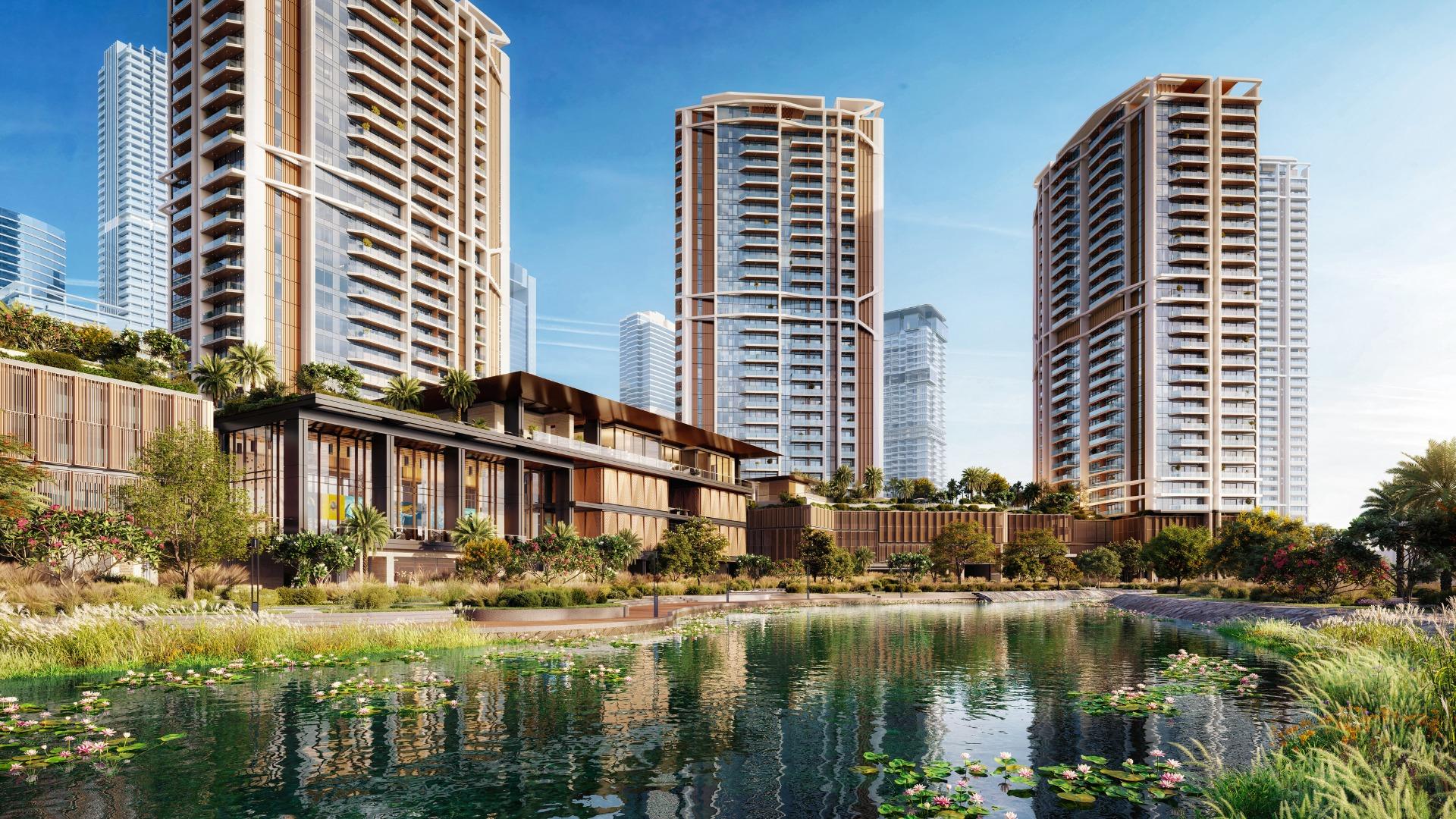
Lunaya Terraces is the residential apartment offering within Zaya's wider masterplan, a community where approximately 65% of the land is dedicated to greenery and open space. At its heart sits a 900,000 square foot swimmable lagoon that anchors the entire lifestyle proposition.
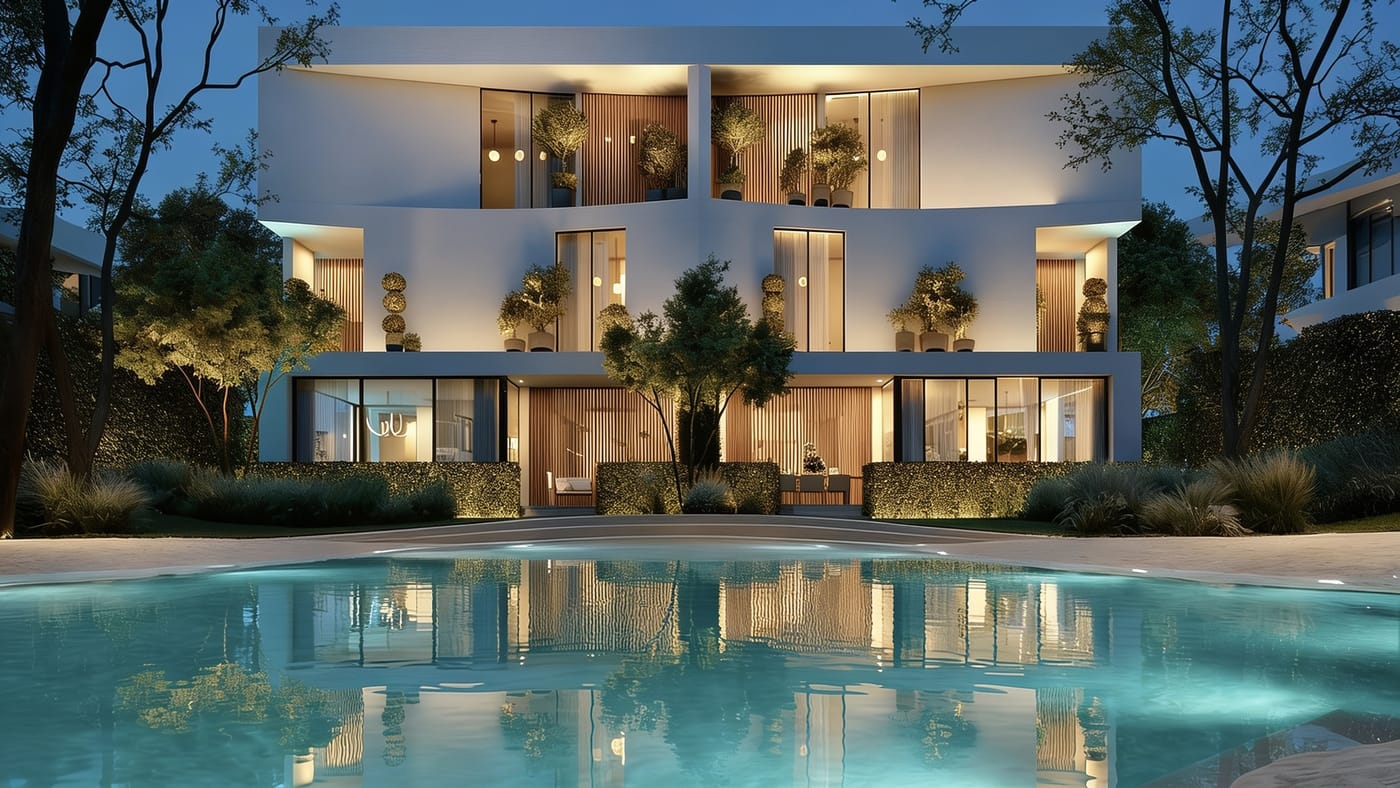
The product is deliberately oversized relative to Dubai market norms. A one-bedroom here runs between 1,124 and 1,190 square feet at a time when the Dubai market average sits between 700 and 900 square feet. Two-bedrooms range from 1,749 to 2,017 square feet, including a maid's room, which Atlas Advisory identifies as the collection's strongest unit for resale liquidity. Three-bedrooms reach between 2,219 and 2,490 square feet, functioning more as a villa substitute than a conventional apartment.
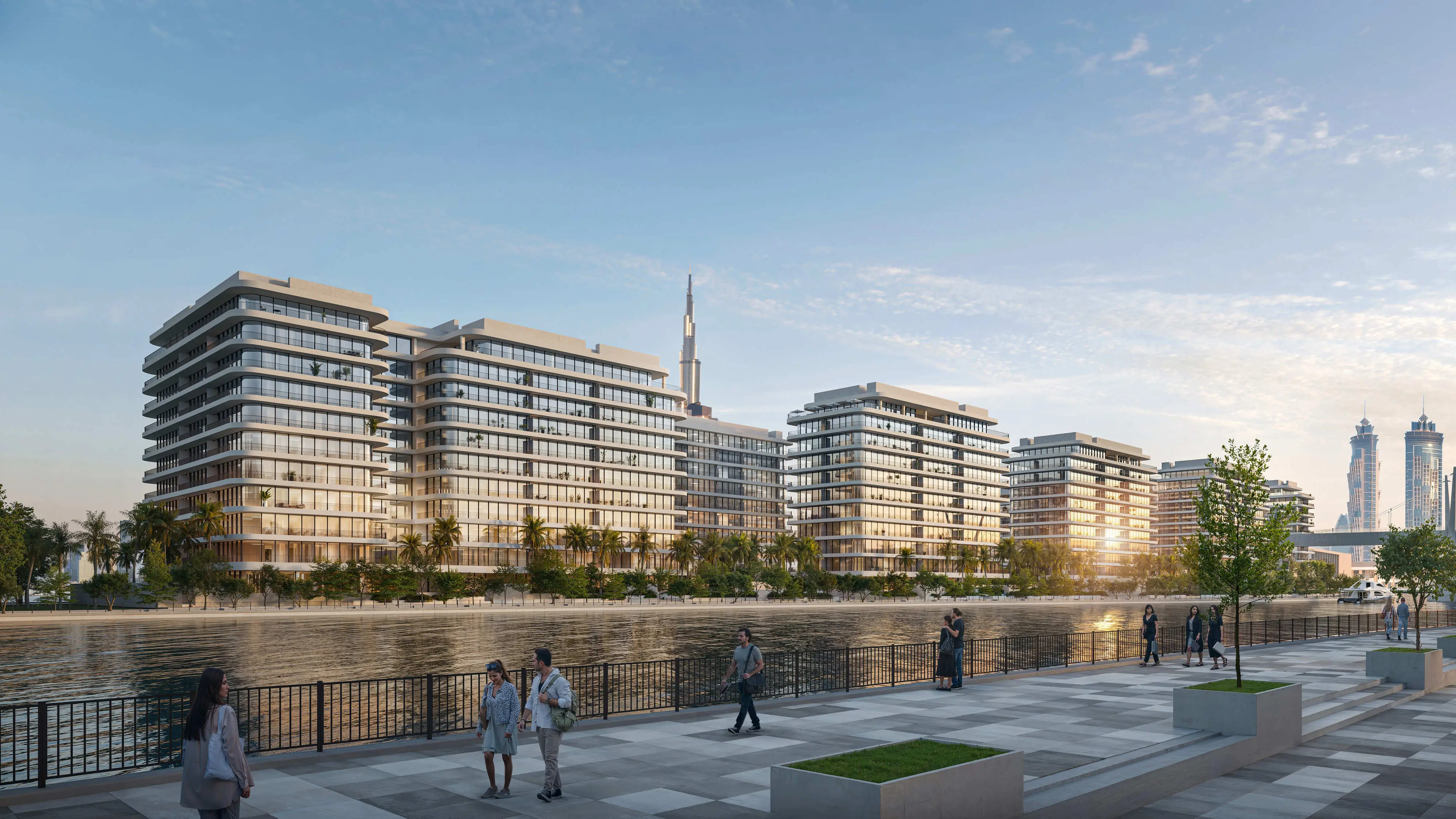
The collection spans five building clusters named Cove, Reef, Haven, Shore and Bay, all within a ground-plus-seven format with rooftop access. The Cove building carries a 25/75 payment plan, meaning only 25% is due during construction and 75% is deferred to completion, which is an efficient structure for capital deployment through a development period.
The thesis here is not bedroom count. It is format, space, privacy, greenery and a location that is still in the early stages of being repriced by government infrastructure investment.
The Six Pillars Behind the Investment Case
The case for Lunaya Terraces rests on six interconnected arguments, none of which works in isolation but which together form a coherent medium-to-long-term thesis.
The first is developer track record. Zaya is the group behind Al Barari, one of Dubai's most recognisable and consistently demanded residential communities. Al Barari proved that greenery, water, privacy and low-density planning can be delivered at scale in Dubai and that buyers attach real, durable value to those qualities once a community matures. That is proof of concept, not just marketing.
The second is product differentiation. In a market where most new supply competes on price per square foot, Lunaya competes on desire. Large-format, terrace-led apartments with genuine indoor-outdoor connection are a different product category from the compact tower units that dominate Dubai's pipeline.
The third is masterplan strength. The 65% greenery allocation and the 900,000 square foot lagoon are not amenities added to a residential scheme. They are the scheme. The residences sit within the landscape rather than the other way around.
The fourth is corridor positioning. Lunaya is in the direct path of Dubai's most concentrated public capital investment: Al Maktoum Airport's AED 128 billion expansion, Expo City Dubai, Dubai South, Jebel Ali Port and Palm Jebel Ali. The Economic Agenda D33 targets doubling the size of Dubai's economy by 2033. These are not speculative catalysts. They are funded, approved and under active development.
The fifth is entry price. At approximately AED 1,892 per square foot for the Cove building, Lunaya sits above The Neighbourhood's mature resale evidence at Al Barari (AED 1,759/sqft) but materially below The Cape's current new-launch pricing (AED 2,907/sqft). The gap between Lunaya's entry and where comparable Zaya product is trading at new-launch stage is where the appreciation thesis lives.
The sixth is payment plan structure. The 25/75 plan on Cove is capital-efficient. Most of the investor's capital is not deployed until handover, which reduces exposure during the construction period and improves the effective return profile if prices move during development.
The Southern Corridor: What Is Actually Being Built
Lunaya is not in a mature prime district and should not be evaluated as one. The correct frame is an emerging corridor where the direction of government capital is increasingly legible.
Al Maktoum Airport's approved terminal programme carries an AED 128 billion price tag and is designed to eventually handle 260 million annual passengers, making Dubai World Central one of the largest aviation hubs on earth. Expo City Dubai, where DP World has established its global headquarters, is becoming a genuine corporate and connectivity node. Dubai Exhibition Centre is expanding into the region's largest purpose-built indoor events venue at a cost of AED 10 billion. Dubai South and Jebel Ali Port together form an air-to-sea logistics corridor that anchors long-term employment demand. Palm Jebel Ali, Nakheel's revived waterfront project, adds tourism and luxury residential to the southern axis.
The standard due diligence question in an emerging corridor is: what is actually being built, and who will live and work here? The answers in Dubai's south are unusually concrete.
What Al Barari Tells Us About Pricing Potential
Atlas Advisory's market analysis draws on 158 Al Barari apartment transactions over the past six months to establish a pricing reference for Lunaya. The comparison is not a promise of equivalent returns. It is evidence that the Zaya landscape-led formula translates into real market demand and durable pricing power once a community matures.
The Neighbourhood at Al Barari, the most liquid ready-market product, trades at a weighted average of AED 1,759 per square foot across a price range of AED 1.3 million to AED 4 million. Seventh Heaven and Ashjar, which represent mature luxury references, trade at AED 1,934 and AED 2,084 per square foot respectively. The Cape, Zaya's current new-launch product at Al Barari, is pricing at AED 2,907 per square foot.
Lunaya Cove enters at approximately AED 1,892 per square foot. That positions it slightly above the mature resale floor of The Neighbourhood and materially below the current new-launch ceiling set by The Cape. The opportunity is entering the same developer's landscape-led thesis at an earlier stage in a new masterplan before the community and the corridor close that gap.
Al Barari also offers a reference yield: mature greenery-led product there is running at approximately 6.54% gross. Lunaya should not be underwritten to that figure yet. The rental market in the southern corridor is still forming. The two-bedroom units, with their size, maid's room and broadest buyer pool, are likely to offer the strongest rental balance as the market develops.
How the Re-Rating Could Play Out
The appreciation case is phased rather than immediate, and understanding the sequence matters.
The first phase is construction progress and absorption. Early sales momentum and visible build progress support initial pricing and reduce execution risk perception.
The second phase is masterplan delivery. When the lagoon, the greenery, the wellness infrastructure and the lifestyle amenities become physical reality rather than renders, the product story becomes tangible. This is the moment at which lifestyle-led communities typically see their first meaningful price step.
The third phase is corridor maturity. As Expo City, Dubai World Central, Dubai South and Palm Jebel Ali attract more residents, workers and visitors, the location premium embedded in Lunaya's pricing becomes easier to underwrite. Perception of the southern corridor will shift.
The fourth phase is resale market formation. After handover, as owners transact and a secondary market forms, price discovery accelerates and liquidity improves. This is where patient early capital tends to see its clearest return signal.
Lunaya is not priced like mature Al Barari new launches today, and correctly so. If the community delivers and the corridor matures on the trajectory the infrastructure investment suggests, today's entry price is likely to look attractive relative to where the project trades once complete.
Who This Investment Is Right For
Lunaya Terraces is the right product for a medium-to-long-term capital appreciation investor, particularly one who is aligned with Zaya's Al Barari track record and is comfortable backing a corridor that is still maturing. It suits lifestyle-led buyers who place genuine value on greenery, water, wellness and space, and who are looking for a lower-ticket route into the Lunaya masterplan compared to the villa and townhouse formats.
It is not the right product for a short-term flipper. The resale market needs time to form. It is not the right product for a pure yield investor whose underwriting depends on immediate and proven rental income. And it is not the right product for someone comparing only by headline price per square foot without accounting for the size premium, format and masterplan quality that define this product.
The 2BR units offer the strongest all-round balance: the largest buyer pool, the deepest likely resale depth, the best rental profile as the market develops and a format that competes directly against villa alternatives for family buyers.
The Bottom Line
The case for Lunaya Terraces is not complexity. It is clarity of thesis: enter Zaya's landscape-led formula at an earlier stage, in the path of Dubai's next major growth corridor, at a price point that still has meaningful room to re-rate as the community proves out and the southern axis matures.
Buy because you believe the project and the corridor mature together. Not for immediate liquidity. Not for short-term yield. For what the southern corridor will look like five years from now, and where Lunaya sits within it.
Frequently Asked Questions
What is Lunaya Terraces by Zaya?
Lunaya Terraces is a large-format apartment collection developed by Zaya within a landscape-led masterplan in Dubai's southern growth corridor. The community dedicates approximately 65% of its land to greenery and open space, anchored by a 900,000 square foot swimmable lagoon. Units range from one to three bedrooms and are significantly larger than Dubai market averages.
Where is Lunaya Terraces located?
Lunaya Terraces is located in Dubai's southern corridor, in proximity to Expo City Dubai, Dubai South, Al Maktoum International Airport and Palm Jebel Ali. It is positioned as an early-stage investment in the area of Dubai receiving the most concentrated government infrastructure investment.
What is the price per square foot at Lunaya Terraces?
The Cove building at Lunaya Terraces is priced at approximately AED 1,892 per square foot, with total prices ranging from AED 2.07 million to AED 4.78 million depending on unit type and size.
How does Lunaya compare to Al Barari pricing?
Lunaya Cove enters at approximately AED 1,892 per square foot, which sits above The Neighbourhood at Al Barari's mature resale average of AED 1,759 per square foot and materially below The Cape's current new-launch pricing of AED 2,907 per square foot. The gap represents the earlier-stage entry opportunity.
What is the payment plan for Lunaya Terraces?
The Cove building offers a 25/75 payment plan, with 25% payable during the construction period and 75% due at completion. This structure defers the majority of capital outlay and improves the efficiency of capital deployment through the development period.
What unit types are available at Lunaya Terraces?
Lunaya Terraces offers one-bedroom, two-bedroom and three-bedroom apartments. One-bedrooms range from 1,124 to 1,190 square feet, two-bedrooms from 1,749 to 2,017 square feet and three-bedrooms from 2,219 to 2,490 square feet, all significantly above Dubai market averages.
Is Lunaya Terraces a good investment?
Lunaya Terraces is positioned as a medium-to-long-term capital appreciation play rather than a short-term flip or high-yield investment. The case is strongest for investors aligned with Zaya's Al Barari track record, comfortable with an emerging corridor thesis and looking for differentiated supply at a price point that has room to re-rate as the community and location mature.
Who developed Lunaya Terraces?
Lunaya Terraces is developed by Zaya, the group behind Al Barari, one of Dubai's most recognised landscape-led residential communities. Al Barari serves as the primary proof of concept for Zaya's ability to deliver greenery, water and wellness at scale.
About the author
Atlas Research Team
Market Intelligence · Atlas Advisory Real Estate
The Atlas Research Team analyses DLD transaction data, developer pipelines, and macroeconomic indicators to produce independent, data-driven insight for property investors across the UAE.
Speak with an Advisor
Have questions about this topic?
Our Advisors provide personalised briefings at no cost. No commitment required.
Request a free consultation